When I taught high school English, my Hispanic students often lived on the margins of the rest of the school community. Their broken English, their cultural traditions, even the way they moved through the hallways marked them as “different” from the majority of our mostly African American student body. They tended to stay together — not out of exclusion, but out of comfort. They shared the same struggles of navigating a world where they didn’t quite “fit.”
But something beautiful happened when we read S. E. Hinton’s coming‑of‑age novel The Outsiders. Both my Hispanic students and my Black students found common ground. They recognized themselves in Ponyboy and Johnny — young people trying to make sense of life from the edges. For a little while, the labels didn’t matter. They were all outsiders. And they understood each other.
Jesus understood outsiders, too. He didn’t just understand them; He welcomed them, honored them, and often lifted their faith as an example for everyone else.
The Roman Centurion — Faith from the “Wrong” Side
In Matthew 8, a Roman centurion — a man representing the occupying force, the “enemy,” the outsider of outsiders — comes to Jesus with a request. He doesn’t bring credentials or religious pedigree. He brings faith.
“Just say the word,” he tells Jesus, “and my servant will be healed.”
Jesus marvels. “I have not found anyone in Israel with such great faith.” The outsider becomes the example.
The Woman With the Issue of Blood — Faith That Reaches
For twelve long years she suffered — physically, emotionally, socially. She was considered unclean, untouchable, unworthy (Mark 5). She shouldn’t have been in the crowd at all. She shouldn’t have reached for Jesus. She shouldn’t have believed she belonged anywhere near Him.
But she did.“If I only touch His cloak…”
And Jesus doesn’t rebuke her. He doesn’t shame her. He doesn’t remind her of the rules.
He calls her daughter. The outsider becomes family.
The Canaanite Woman — Faith That Refuses to Leave
In Matthew 15, a Canaanite woman cries out for her daughter’s healing. She is not Jewish. She is not part of the covenant people. She is, by every cultural measure, outside the circle.
But she refuses to leave.
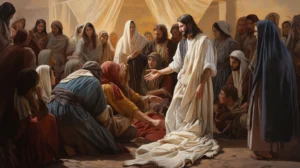 Even when the disciples try to send her away. Even when the conversation feels hard. Even when she is reminded of the boundaries. She stays. She believes. She persists.
And Jesus answers her with honor: “Woman, you have great faith.” The outsider becomes the example of perseverance.
Jesus’ Ministry Was Never Contained
None of these people belonged to the “right” group. None of them fit the expected mold. None of them were insiders.
But Jesus didn’t come only for insiders. He came for the world.
His compassion crossed borders. His healing reached beyond boundaries. His kingdom welcomed those standing on the margins.
Just like my students who saw themselves in The Outsiders, these Gospel stories remind us that Jesus sees the ones who feel unseen. He honors the faith of those who feel like they don’t belong. He draws near to those who have been pushed away.
A Word for Us Today
Maybe you’ve felt like an outsider — in church, in family, in life. Maybe you’ve wondered if your story disqualifies you. Maybe you’ve questioned whether you’re close enough, good enough, faithful enough.
These stories whisper the truth: Jesus meets outsiders with open arms. He marvels at their faith. He calls them family. He welcomes them into His kingdom.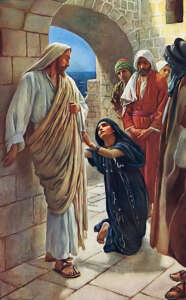
And He still does.
A Prayer
Lord Jesus, thank You for seeing the ones who stand on the edges. Thank You for honoring faith wherever it is found. Draw near to those who feel outside today, and remind us that Your kingdom is wide enough for every story, every struggle, every seeker. Amen.