Acts 10:34–43
Remember when Allen first came to this church? He walked in wearing the same gray, tattered sweatpants he’d worn all week, ones he had inexpertly patched with orange thread, a jangle of keys dangling from his pocket. It was a challenging time for my son — still recovering from his father’s death, teetering on some mental health struggles, uncertain of what he would find here. He came because, as a dutiful son, he tried to do what he knew brought me comfort.
I wasn’t sure he would come back.
But he did. Week after week. No one asked him to change his pants. No one questioned him when he merely waved and did not talk. And gradually, the acceptance Allen felt here gave him courage. To wear clean pants. To leave the keys at home. To volunteer to clean out the coffee pots. To set up tables for events. To serve as usher.
To become the official hugger of Atonement Global Methodist Church.

This same attitude is displayed by Peter in Acts 10:34–36:
“I now realize how true it is that God does not show favoritism.”
Peter went against the customs of devout Jews by entering the home of Gentiles. He realized that God did not hate the Gentiles — the common assumption of the day — but loved them as much as the children of Israel. Peter also knew it was time for the Gentiles to share in the Good News of Jesus. As the first faith to disregard racial, national, or cultural limitations, Christianity healed the divide between Jews and Gentiles.
In the book of Acts, Peter preached the same Gospel to both Jews and Gentiles. It was necessary for both groups to hear about Jesus and His sacrifice. Both needed grace. Both needed welcome.
When Allen walked through the church doors in those patched sweatpants, he didn’t look like someone “ready” for church. But neither did the Gentiles look “ready” for the Gospel. And yet God welcomed them — not because of how they appeared, but because of who He is.
That same welcome met Allen here. It met Peter in Cornelius’s home. And it meets us today.
Because the God who “shows no favoritism” is still building a family where no one is turned away, no one is measured by their clothing or their history, and no one is left standing at the margins.
Allen found his place here. The Gentiles found theirs in Acts. And we are invited to make room for whoever walks through our doors next — keys jangling, sweatpants patched, hearts uncertain — trusting that God is already at work.
Takeaway
God’s welcome is wider than our assumptions and deeper than our comfort zones. Just as Peter discovered that the Gospel was meant for every nation, every story, every heart, we are called to extend that same open-armed grace. When someone walks through our doors — uncertain, hurting, or simply hoping to belong — we have the holy opportunity to reflect the God who “shows no favoritism” and who delights in drawing all people close.
Closing Prayer
Lord Jesus, Thank You for seeing each person with compassion rather than comparison. Teach us to welcome others the way You welcomed us — without hesitation, without judgment, and without fear. Give us eyes like Peter’s, newly opened to Your boundless love, and hearts ready to make room for whoever You send our way. May our church be a place where courage grows,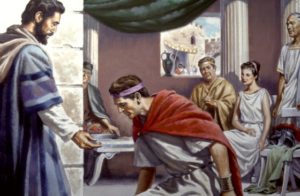 healing begins, and every person finds a home in Your grace. Amen.
Reflection Questions
- Where have I seen God’s “no favoritism” welcome in my life — and how did it change me?
- Who might God be inviting me to notice, include, or encourage — especially someone who may not look “ready” for church?
- What minor act of acceptance (a smile, a greeting, a simple kindness) could help someone find courage, just as Allen did?